Irving Park and New Irving Park Aren't the Same Market. The Median Price Just Makes It Look That Way.
September 3, 2026
September 3, 2026
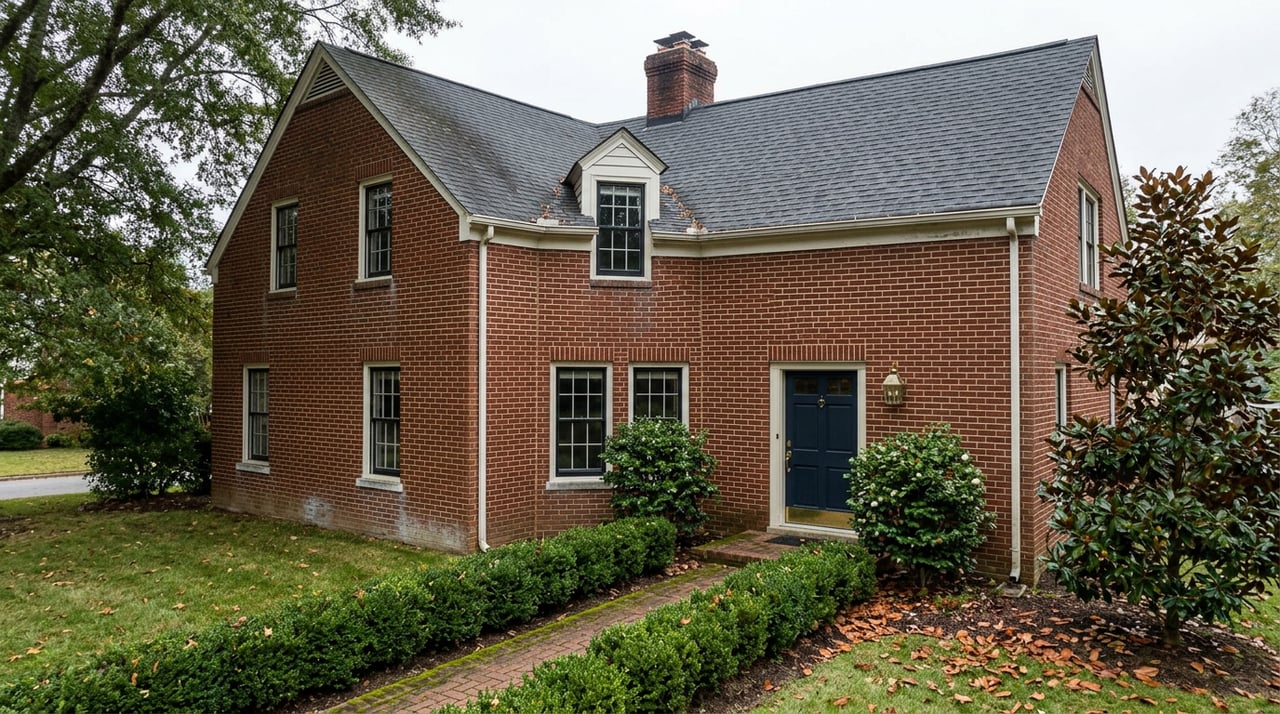
Pull up two listings side by side, both labeled "Irving Park," both priced in the mid $500,000s, and you would assume you are comparing two homes in the same market. You are not. One sits inside a historic district platted before the Depression, where roughly a dozen homes trade hands in a typical month. The other sits in a postwar expansion where new listings and comps show up in double the volume. The price tags can look nearly identical. The market underneath them does not behave the same way at all, and if you only read the median, you will miss why.
Irving Park exists because Greensboro Country Club needed a reason to sell lots. The club incorporated in 1911, bought land north of downtown from the Scales family, and hired landscape architect John Nolen to lay out curving streets around a golf course that Donald Ross would later redesign through the mid-1920s. Builders raced to fill in those lots through the 1920s, working with architects like Charles Barton Keen and Charles Hartmann on Colonial Revival, Tudor Revival, and Classical Revival houses. That was the peak. The Depression forced the Irving Park Company into receivership, and the company dissolved in 1940. World War II halted construction again, and when building finally resumed after the war, it happened on different ground.
Most of what got built from the late 1940s onward went up outside the historic district's boundary, using smaller floor plans and the newer, more standardized styles of the era. That postwar growth is what became New Irving Park: Colonial Revival, Georgian, and Federal-style homes built largely from the 1950s onward, distinct enough in age and footprint that the two areas earned separate names on maps and in listings. The split was not a marketing decision. It was a construction timeline.
Here is where it gets useful for anyone actually comparing the two right now. Recent Redfin tracking for the historic core shows the average house price climbing by double digits year over year, while the same dataset's March 2026 snapshot shows the median sale price falling nearly 15 percent to $378,000 compared to the year before. Those two numbers, pulled from the same neighborhood in the same window, point in opposite directions. That is not a contradiction in the market. It is what happens when only 14 homes sell in a month, down from 22 the year before. A couple of unusually large or unusually modest sales can swing a median hard in a market that thin, and the average and the median will not always agree on which way things are heading.
New Irving Park does not have this problem to the same degree. Redfin's figures for that neighborhood show an average house price closer to $496,000, up about 4.4 percent year over year, a steadier climb that reflects a larger, more consistent flow of transactions. When more homes sell every month, one outlier sale gets absorbed into the average instead of dominating it.
| Historic Irving Park | New Irving Park | |
|---|---|---|
| Recent sales volume | About 14 closed sales in March 2026, down from 22 a year earlier | Higher, steadier monthly volume |
| Price direction | Average up double digits year over year, median down nearly 15% in the same window | Average up roughly 4.4% year over year |
| What drives the number | A handful of transactions, easily skewed by one or two outlier sales | Broader sample, smoother trend |
If you are cross-shopping both neighborhoods and someone hands you a single median price for each, ask how many homes that median is built on. In the historic core, the answer might be small enough that the number tells you less than you think.
The clearest illustration of what "historic" does and does not guarantee in Irving Park happened in March 2024, and it is worth understanding before anyone assumes a National Register listing protects a house from a bulldozer.
The J. Spencer Love House at 710 Country Club Drive was built in 1936 for the founder of Burlington Industries. It later passed through the hands of Benjamin Cone, a former Greensboro mayor, and Bonnie McElveen-Hunter, a former U.S. ambassador to Finland. It sat on the market for five years before developer Roy Carroll bought it for $4.5 million. The house came down.
Preservation Greensboro's own writeup of the episode put it plainly, calling the loss a reminder that "National Register status alone is not enough to protect a historic building from the landfill." That is the mechanism buyers need to understand. Irving Park's National Register listing dates to 1995, according to HMDB, and is a recognition program. It documents architectural and historical significance. It does not, by itself, require a homeowner or developer to get approval before altering or demolishing a contributing structure.
A separate data comparison from Realtor.com's Greensboro market overview put median days on market at 50 for the historic core and 99 for New Irving Park, roughly double. On the surface that seems backward. Shouldn't the newer, more move-in-ready inventory sell faster than century-old estates?
Not necessarily, and the reason gets at something real about how buyers shop each area. A 1925 Colonial Revival on Sunset Drive with a Charles Barton Keen pedigree does not have a direct substitute three streets over. Buyers who want that specific combination of age, architecture, and address are not cross-shopping a 1962 brick ranch in New Irving Park. When the right historic property comes up priced honestly, there is limited competing inventory to pull a buyer's attention elsewhere, which can compress the sale timeline. New Irving Park's postwar stock is comparatively more interchangeable: similar ages, similar layouts, similar price bands. Buyers there have more true substitutes to compare, so they take longer deciding, even though the overall price trend is calmer.
That said, the Spencer Love House itself sat unsold for five years before Carroll's offer. Neighborhood-level days-on-market figures describe the typical transaction, not every transaction. A specific address can defy the trend in either direction, which is exactly why a due diligence conversation should always come back to the individual property's own listing history, not just the district average.
If you are weighing Irving Park against New Irving Park, a few habits will serve you better than trusting either headline median on its own.
Is "Old Irving Park" the same neighborhood as "Irving Park"? In most listings and data sources, yes. Some portals add "Old" to distinguish the historic core from New Irving Park, though longtime residents typically just call it Irving Park.
Why do New Irving Park's price stats look steadier than Irving Park's? Volume. More homes changing hands each month means any single unusual sale has less power to swing the median or average, which is the opposite of what happens in the thinner historic market.
Comparing two neighborhoods that share a name but not a construction era, a transaction volume, or a regulatory reality takes more than a side-by-side price check. If you want to talk through what a specific address in either Irving Park actually means for your renovation plans, your financing, or your timeline, Emma Skelton can walk through the property-level details that a median price will never show you.
This article is general information, not legal, tax or financial advice. Consult a qualified professional about your situation.
Whether you are looking to buy or sell a luxury property, you can trust my expertise and dedication. Together, let's navigate the real estate market, achieve your goals, and create the lifestyle you desire. Contact me today, and let's embark on this exciting journey together.