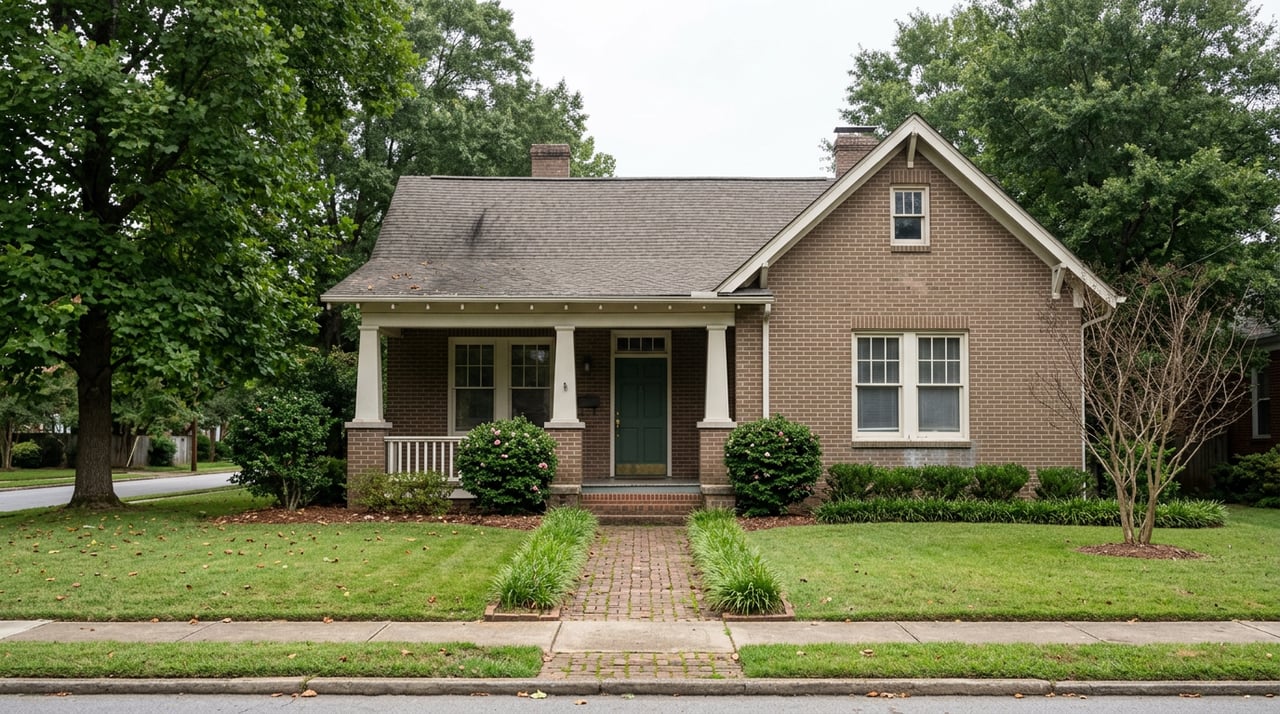
Fisher Park Renovations: How the COA Calendar Works
August 27, 2026
August 27, 2026
If you are eyeing a bungalow on Fisher Avenue or a foursquare on Bessemer with plans to add a screened porch or push out the kitchen, the number that should worry you is not the median sale price. It is the 27th, or the 25th, or whichever Wednesday happens to be last on the calendar. The Greensboro Historic Preservation Commission's design review is real, and it is friendly to homeowners, but it runs on a fixed monthly clock that has nothing to do with when your inspection period ends or when your contractor is free to start.
That distinction matters more in Fisher Park than almost anywhere else in Greensboro, because Fisher Park is one of only three neighborhoods in the city where a Certificate of Appropriateness is not optional. College Hill, Dunleath, and Fisher Park are Greensboro's three locally zoned historic districts, and in all three, exterior work requires city sign-off before you pick up a hammer. Fisher Park's designation is regulation with a hearing schedule attached.
The rule is simpler than the reputation suggests. A Certificate of Appropriateness, known locally as a COA, covers exterior work.
That is when the COA calendar becomes part of the project.
There is currently no filing fee for a COA application, which removes one friction point buyers in other historic markets deal with. The friction here is entirely about timing.
The Greensboro Historic Preservation Commission, a nine-member board appointed by City Council, meets on the last Wednesday of each month at 4 p.m. in the Plaza Level Conference Room of the Melvin Municipal Office Building on West Washington Street. According to the City of Greensboro, applications and all supporting materials are due no later than 21 days before that meeting. Miss the deadline and your project does not get bumped to the next available slot. It waits for next month's meeting entirely.
Minor work can be staff-approved, while major work goes before the full Commission.
The record suggests the Commission is not looking for reasons to say no. According to the Greensboro Historic Preservation Commission, in a 2021 hearing, a homeowner at 108 Fisher Park Circle applied to add a roof over a rear patio, converting what had been a parking pad into usable outdoor space, and modeled the design after side porches she had seen walking the neighborhood. Commissioners focused narrowly on how the roofline would read against the original stoop and basement window, then voted 7-0 to approve it.
Sign approvals get similarly specific attention rather than blanket rejection. According to the Greensboro Historic Preservation Commission, in another case on file, an application for an informational sign near a school entrance on Cypress Street was approved with five distinct conditions attached, including a height cap, a requirement that the brick match existing school or approved neighborhood signage, and a directive that brick caps mirror ones already used on a nearby neighborhood sign. The Commission said yes, but it said yes with a level of material specificity that tells you exactly what kind of documentation you should walk in with: photos, drawings, and material samples, not a verbal description.
The one place the Commission's authority genuinely bites is demolition. In that same set of case records, a request tied to a contributing structure on Magnolia Street resulted in the Commission invoking a 365-day delay under state enabling legislation, along with conditions that the site be graded and seeded within 60 days and that trees be protected during the work. If your plan for a Fisher Park property involves tearing something down rather than adding onto it, budget for that year, not for a Wednesday.
According to UNC Greensboro, more than 90 percent of Certificates of Appropriateness in Fisher Park are approved. The mechanism working against you is rarely the Commission's judgment. It is the sequencing.
The practical takeaway for anyone under contract or writing an offer on a Fisher Park home with renovation plans is to treat the COA calendar as a line item, not an afterthought.
Denials can be appealed to Guilford County Superior Court under the same state statutes that create the Commission's authority, but that path adds real time to a project that is already running on a monthly clock. The homeowners who move fastest through this process are the ones who show up with elevation drawings, material specifications, and photographs of existing conditions on the first pass, not the ones who assume a conversation with staff will substitute for paperwork.
This matters more right now because Fisher Park's for-sale inventory has stayed thin. As of July 2026, only five homes were listed for sale in the neighborhood at once, up from just two listings in the same month a year earlier. Even with that increase, five active listings is not much to choose from. When there are only a handful of houses on the market at any given moment, the house that fits your renovation vision may not come back around next quarter. Knowing the COA calendar before you write an offer, rather than after you close, is what lets you move on a good house with a real plan instead of a hopeful one.
Does a Fisher Park COA cost money? Not currently. There is no filing fee for the application itself, though projects requiring variance relief from the Board of Adjustment carry a separate fee for that process.
What happens if the Commission says no? You can appeal to Guilford County Superior Court.
If you are weighing a historic property in Fisher Park and want to know what a specific renovation idea would actually require before you write an offer, that is exactly the kind of groundwork worth doing early. Emma Skelton works this neighborhood closely enough to help you map your closing date against the Commission's calendar before you are locked into a timeline that does not fit. Reach out and let's talk through what your project actually needs.
This article is general information, not legal, tax or financial advice. Consult a qualified professional about your situation.
Whether you are looking to buy or sell a luxury property, you can trust my expertise and dedication. Together, let's navigate the real estate market, achieve your goals, and create the lifestyle you desire. Contact me today, and let's embark on this exciting journey together.